||||
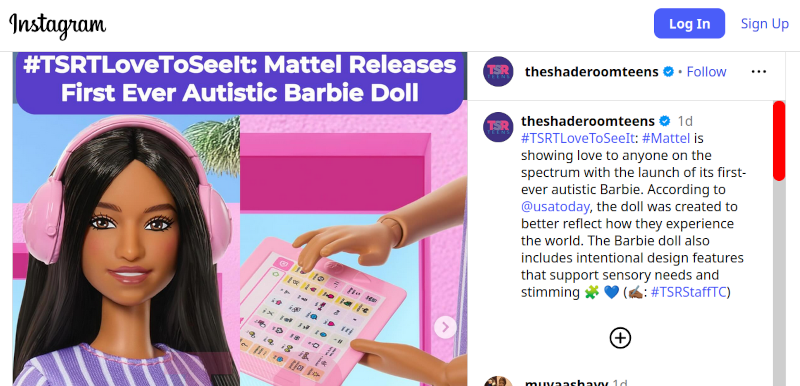
American society in 2026 is increasingly intolerant of "difference" in its raw form. Difference must be rendered legible. It must be named, classified, encoded, and routed. Only then can it be allowed to exist-- as a known quantity. Containable.
This is often mistaken for empathy.
What is actually taking place is administrative capture: the conversion of human variation into categories for institutions to recognize, manage, and monetize. Personality becomes symptom. Idiosyncrasy becomes indicator. Difficulty becomes disorder. The language of care performs the transformation, but the engine beneath it is logistical.
There was a time (not ancient history, but recent memory) when autism referred to a specific and severe constellation of impairments. Profound communication difficulty. Major cognitive limitation. Deep incapacity for independent functioning. The classification was narrow because the condition was narrow, though known to exist on a spectrum in its presentation. No metaphor was required. No qualifier of severity. The distinction between disorder and temperament was not ambiguous.
That distinction has been deliberately eroded.
The expansion of diagnostic categories is usually defended as enlightenment: society finally "recognizing" what it previously ignored. This framing is emotionally satisfying and politically unassailable. It casts skepticism as cruelty and restraint as denial. But it obscures the more mundane truth: systems require throughput. Categories that remain small do not justify infrastructure. Categories that expand do.
Education systems need codes to allocate resources. Medical systems need diagnoses to bill. Pharmaceutical systems need populations large enough to sustain markets. Advocacy organizations need constituencies. Media ecosystems need narratives. Corporate branding needs symbols.
None of this requires conspiracy. It requires alignment.
When a child dislikes noise, avoids eye contact, fidgets, or resists social ritual, these behaviors can be interpreted in many ways. They can be treated as temperament. They can be seen as situational. They can be addressed with patience, discipline, negotiation, or simple acceptance. But those approaches do not scale. They cannot be standardized. They do not justify programs.
A diagnosis does.
Once named, the behavior is no longer merely observed. It is explained. It becomes evidence of an underlying condition. The explanation relieves parents, teachers, and institutions of ambiguity. It replaces judgment with protocol. And it enters a "permanent record" that will follow the child through schools, clinics, and eventually workplaces, shaping an individual's sense of self.
The language used to describe this process insists that nothing is lost. The diagnosis is "just a label." But labels do not behave passively. They reorganize perception. They determine which traits are foregrounded and which are ignored. They change how behavior is interpreted by others and eventually by the person themselves.
This is the critical shift: explanation becomes identity.
Once a trait is medicalized, it cannot return to neutrality. The child is no longer fussy; they are sensory-sensitive. No longer stubborn; they are rigid. No longer solitary; they are socially impaired. Each translation is supposed to sound more tolerant and less judgemental than the last, but whether socially impaired is a kinder, gentler way to say solitary is at best... debateable. Each retranslation narrows the range of acceptable interpretation. The person becomes legible only through the diagnosis.
The system presents this as progress.
But progress toward what?
Toward a society in which ordinary human variance is even less tolerated (unless accompanied by paperwork) than at present. Toward a culture where difficulty must be justified by pathology. Toward a moral economy where suffering is only legitimate if medically certified.
Expansion of diagnostic identity does not merely describe people; it produces them.
A secondary effect follows naturally. Once a label is widely available and culturally validated, it becomes desirable, not because people are dishonest or because the impairments that accompany the designation are not the source of real suffering, but because the label performs social labor.
In many cases a diagnosis offers retroactive coherence. Past failures are reinterpreted. Awkwardness becomes neurological. Anxiety becomes disorder. Underperformance becomes obstacles heroically overcome. The label absolves without accusation. It explains without condemning. It transforms contingency into narrative.
In a competitive and judgment-heavy society, this is an extraordinary resource.
The language of pride often accompanies this transformation. Individuals are encouraged to celebrate what makes them different. But the celebration is conditional. Difference is only worthy of pride once it has been sanctioned by an authority. The same behavior, absent diagnosis, would be treated as immaturity, incompetence, or moral failure.
This is not liberation from stigma. It is the substitution of one form of legitimacy for another.
The diagnosis functions simultaneously as shield and badge. It protects against blame while conferring moral status. And because it is framed as self-acceptance, questioning its proliferation is treated as an attack on dignity rather than a critique of institutions.
This is how discourse is policed without censors.
The most revealing aspect of this entire process is how insistently it presents itself as neutral.
Clinicians will say the label is a tool. "Just a tool:" insurance companies and pharmacies need billing codes. Educators will say it exists only to provide support. Corporations will say representation matters. And language systems which will write the majority of what humans read about hear about the topic will say, if asked, that they are merely reflecting consensus.
But neutrality is a posture, not a condition.
Every classification system encodes values. Every diagnostic threshold is a judgment call. Every expansion reflects incentives. The pretense of neutrality is what allows the machinery to operate without resistance.
Once a category exists, it must be filled. Once filled, it must be defended. Once defended, it must be normalized. And once normalized, it becomes invisible—simply the way things are.
This is why critique encounters such resistance. It is not that the critique is incoherent. It is that it threatens infrastructure.
The role of language here is not incidental. Language is the primary tool by which difference is rendered manageable.
Clinical language does not merely describe behavior; it stabilizes it. It freezes fluid traits into fixed entities. It makes the abstract concrete. Once a word exists, it can be counted, tracked, and optimized.
This is why institutional systems favor diagnostic speech over descriptive speech. Description invites interpretation. Diagnosis forecloses it.
And this is why automated language systems, trained on institutional outputs, reproduce the same patterns. They default to approved framings. They smooth over ambiguity. They quietly omit inconvenient distinctions. Not because they are malicious, but because they are optimized for coherence within existing structures.
The system does not ask whether the expansion of diagnosis is good. It assumes that it is, because the data it was trained on assumes it is. Dissenting framings exist, but they are statistically underrepresented and often flagged as risky.
What appears as safety is often simply orthodoxy.
The cost of this transformation is subtle but profound.
It is the loss of untheorized personhood.
When every trait is potentially diagnostic, people learn to interpret themselves through checklists. They become amateur clinicians of their own lives. Discomfort is no longer endured, negotiated, or contextualized; it is explained away. Growth becomes treatment. Adaptation becomes accommodation.
The space for character shrinks.
This does not mean that suffering is imagined or that support is unnecessary. It means that the framework through which suffering is understood increasingly excludes non-medical explanations. Social structures, economic pressures, cultural norms, and ordinary human limits are backgrounded. The problem is relocated into the individual, then returned to them as identity.
In this sense, the expansion of diagnostic categories is not merely a medical phenomenon. It is a cultural one. It reflects a society uncomfortable with ambiguity, allergic to judgment, and dependent on systems that require clean inputs.
Difference is tolerated only once it is processed.
The question is not whether autism exists. It does. The question is whether the relentless expansion of its definition serves human flourishing or institutional convenience.
When the same behaviors can be labeled or not labeled based purely on administrative utility, the diagnosis loses its descriptive integrity. It becomes a switch, not a discovery.
And when language—whether clinical, corporate, or algorithmic—presents this process as inevitable, compassionate, and neutral, it demands scrutiny rather than gratitude.
A society that cannot tolerate difference without diagnosing it has not become more humane. It has become more managed.
And management, however gently framed, is not the same thing as understanding.